Introduction: A Presidency That Sparked Strong Reactions
The administration of Donald Trump remains one of the most debated periods in modern American political history. While many supporters praised his policies and leadership style, a significant portion of the population expressed strong criticism and opposition. This divide was not limited to political circles but extended into society, media, and even global perspectives. The intensity of reactions toward his administration reflects how deeply his policies and approach impacted people’s lives. Understanding why many people disliked his administration requires looking at multiple factors, including policy decisions, communication style, and broader social impacts. These criticisms were often rooted in concerns about governance, democratic values, and national unity. The discussion is complex, with opinions shaped by personal beliefs, economic conditions, and political affiliations. Exploring these perspectives helps provide a clearer picture of the controversies surrounding his presidency.
Leadership Style and Communication Approach
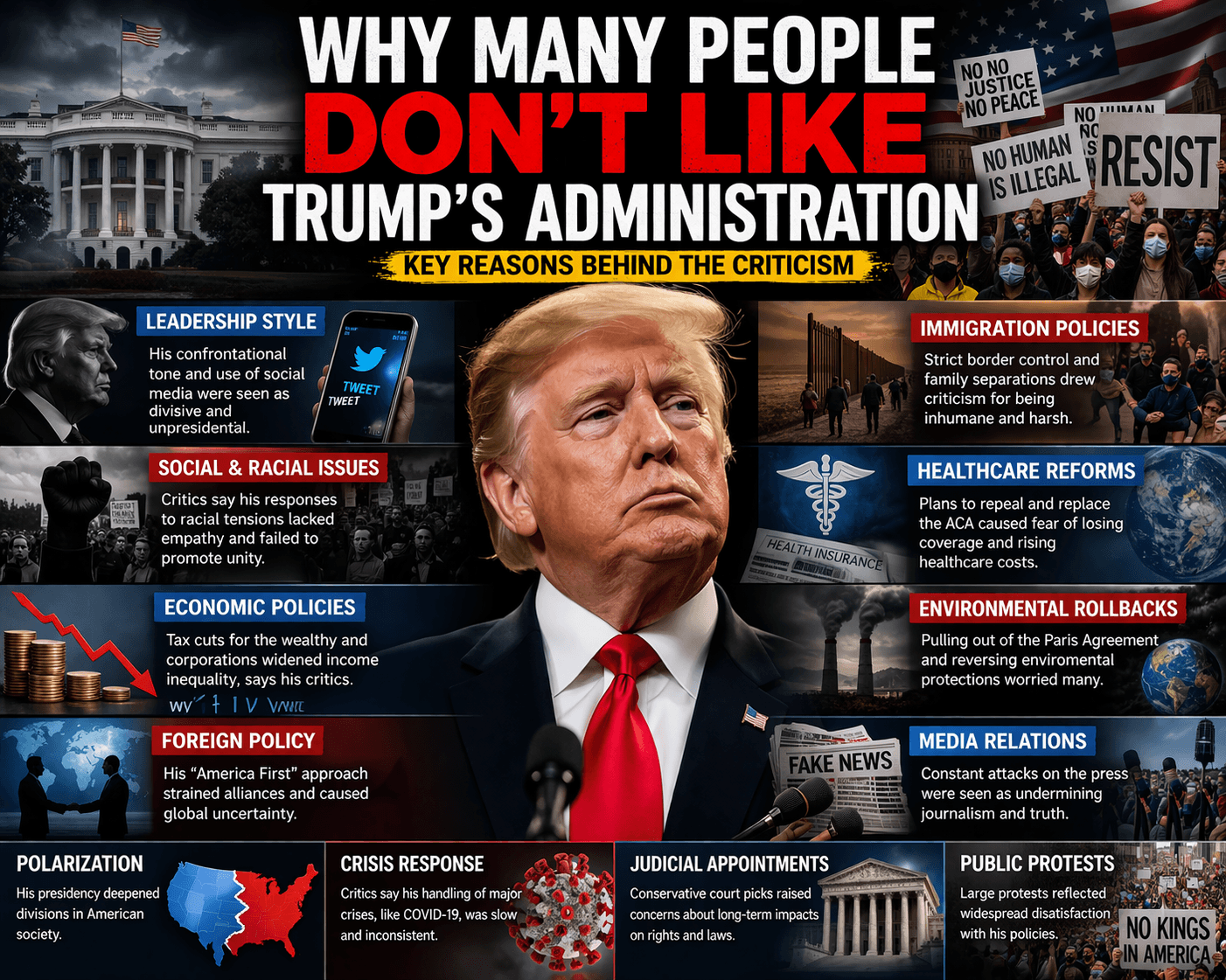
One of the most commonly cited reasons for criticism was Trump’s leadership style and communication methods. His direct and often confrontational approach to communication was seen by some as refreshing, but by others as divisive and unpresidential. Frequent use of social media as a primary communication tool raised concerns about the tone and accuracy of public statements. Critics argued that this style sometimes escalated tensions rather than calming them. The lack of traditional diplomatic language was also seen as a departure from established norms. This approach created a perception of unpredictability in leadership. Supporters viewed it as honesty, while critics saw it as a lack of professionalism. The way messages were delivered often became as controversial as the policies themselves. This communication style played a major role in shaping public opinion. It contributed significantly to the polarized reactions toward his administration.
Immigration Policies and Border Control
Immigration policies were another major source of criticism during Trump’s administration. Efforts to tighten border control and reduce illegal immigration were central to his agenda. While some supported these measures as necessary for national security, others viewed them as too harsh. Policies related to border enforcement and family separation sparked widespread debate and protests. Critics argued that these measures lacked compassion and humanitarian consideration. The administration’s stance on immigration also influenced international perceptions. It became a defining issue that shaped both domestic and global discussions. The complexity of immigration policy made it a highly emotional topic. Different perspectives led to strong disagreements among citizens. This issue remained one of the most controversial aspects of his presidency.
Handling of Social and Racial Issues
Trump’s administration faced criticism regarding its handling of social and racial issues. Events and responses during this period often sparked national conversations about equality and justice. Critics argued that leadership responses sometimes failed to unify the country during times of tension. Statements and actions were closely scrutinized by both supporters and opponents. These moments contributed to a perception of division within society. Supporters believed the administration was addressing issues honestly, while critics felt it lacked sensitivity. The handling of these topics had a lasting impact on public discourse. It influenced how different communities viewed the administration. Social and racial issues became central to the broader debate about leadership. This area remains a key reason for ongoing criticism.
Healthcare Policies and Reforms
Healthcare was another area where Trump’s administration faced significant opposition. Efforts to modify or replace existing healthcare systems created uncertainty for many citizens. Critics were concerned about the potential loss of coverage and rising costs. Healthcare is a deeply personal issue, affecting millions of people directly. Changes in policy often lead to strong emotional reactions. Supporters argued for reform and efficiency, while critics emphasized stability and accessibility. The debate highlighted differences in priorities and perspectives. This issue became a major point of contention in political discussions. It also played a role in shaping public opinion about the administration. The complexity of healthcare policy made it difficult to find common ground.
Economic Policies and Wealth Distribution
Trump’s economic policies received both praise and criticism, depending on perspective. Tax reforms and business-friendly policies were seen by supporters as beneficial for economic growth. However, critics argued that these policies disproportionately favored wealthy individuals and corporations. Concerns about income inequality became part of the broader debate. Economic outcomes can vary across different groups, leading to differing opinions. While some experienced growth and opportunity, others felt left behind. This disparity contributed to mixed reactions. The economy is often a key factor in evaluating any administration. In this case, it became a source of division rather than consensus. The discussion around economic policy remains ongoing.
Environmental Policies and Climate Change
Environmental policy decisions were another area of concern for critics. Actions related to climate agreements and regulations sparked debates about long-term sustainability. Critics argued that certain decisions weakened environmental protections. Climate change is a global issue, making these policies significant beyond national borders. Supporters emphasized economic considerations and regulatory flexibility. This difference in priorities led to strong disagreements. Environmental concerns are often tied to future generations, adding to their importance. The administration’s approach influenced both domestic and international discussions. It became a key factor in shaping global perceptions. This topic continues to be a major point of debate.
Foreign Policy and International Relations
Trump’s approach to foreign policy was unconventional and often controversial. His administration focused on renegotiating agreements and prioritizing national interests. Supporters viewed this as a strong and independent stance. Critics, however, argued that it strained relationships with allies. Changes in international agreements and diplomatic approaches created uncertainty. Foreign policy decisions can have far-reaching consequences. The balance between cooperation and independence became a central issue. This approach influenced how other countries viewed the United States. It also affected global stability and partnerships. The debate over foreign policy remains a key aspect of his legacy.
Media Relations and Public Trust
The relationship between Trump’s administration and the media was notably tense. Frequent criticism of news organizations created a climate of distrust. Supporters believed the media was biased, while critics argued that attacks on the press undermined accountability. This dynamic influenced how information was consumed and interpreted. Public trust in institutions became a significant issue. The role of media in democracy is crucial, making this conflict particularly important. It also contributed to the spread of differing narratives. The divide between media and leadership affected public perception. This tension remains a lasting impact of the administration.
Polarization of American Society
One of the most significant criticisms was the increased polarization during Trump’s presidency. Political and social divisions became more pronounced. Differences in opinion often led to conflict rather than discussion. This polarization extended beyond politics into everyday life. Families, communities, and workplaces felt the impact. The administration’s style and policies contributed to this environment. Supporters and critics became more entrenched in their views. This division made it difficult to find common ground. It also influenced future political dynamics. The effects of this polarization are still being felt today.
Handling of Major National Crises
The administration’s response to major national crises was another point of criticism. Leadership during challenging times is closely evaluated by the public. Decisions and communication strategies play a crucial role in shaping outcomes. Critics argued that responses were sometimes inconsistent or ineffective. Supporters believed the administration acted in the country’s best interest. Crisis management is complex and often judged in hindsight. These events had a significant impact on public opinion. They also influenced how leadership was perceived. This aspect remains a key factor in evaluating the administration.
Judicial Appointments and Policy Direction
Trump’s judicial appointments had a lasting impact on the legal landscape. Supporters viewed these appointments as fulfilling campaign promises. Critics, however, were concerned about the long-term implications. The judiciary plays a crucial role in shaping policy and interpretation of laws. These appointments influenced debates on various issues. The impact extends beyond a single administration. This area became a focal point for both praise and criticism. It highlights the importance of long-term decision-making in governance.
Public Protests and Opposition Movements
The administration saw a rise in public protests and opposition movements. Citizens used demonstrations to express their views and concerns. These movements reflected the level of engagement and passion among the public. Protests became a visible sign of dissatisfaction. They also contributed to the national conversation. The ability to protest is a fundamental aspect of democracy. These events highlighted the diversity of opinions within the country. They also showed how strongly people felt about the issues. This level of activism was a defining feature of the period.
Supporters vs Critics: A Deep Divide
The divide between supporters and critics of Trump’s administration was significant. Each side had strong arguments and beliefs. Supporters emphasized economic growth and strong leadership. Critics focused on social, political, and ethical concerns. This divide reflects broader differences in values and priorities. Understanding both perspectives is essential for a balanced view. The intensity of this divide influenced political discourse. It also shaped future elections and policies. This polarization remains a key aspect of the administration’s legacy.
Conclusion: A Complex and Controversial Legacy
The criticisms of Donald Trump’s administration stem from a wide range of issues, each contributing to a complex and often controversial legacy. While some praised his approach and policies, others strongly opposed them. The reasons for criticism are varied and deeply rooted in personal and political perspectives. This period in history highlights the challenges of leadership in a diverse society. It also underscores the importance of dialogue and understanding. The impact of his administration continues to influence political discussions today. Whether viewed positively or negatively, it remains a significant chapter in American history. Understanding these perspectives helps provide a clearer and more informed view of the debates surrounding his presidency.