Introduction: A Crisis That Could Reshape the World
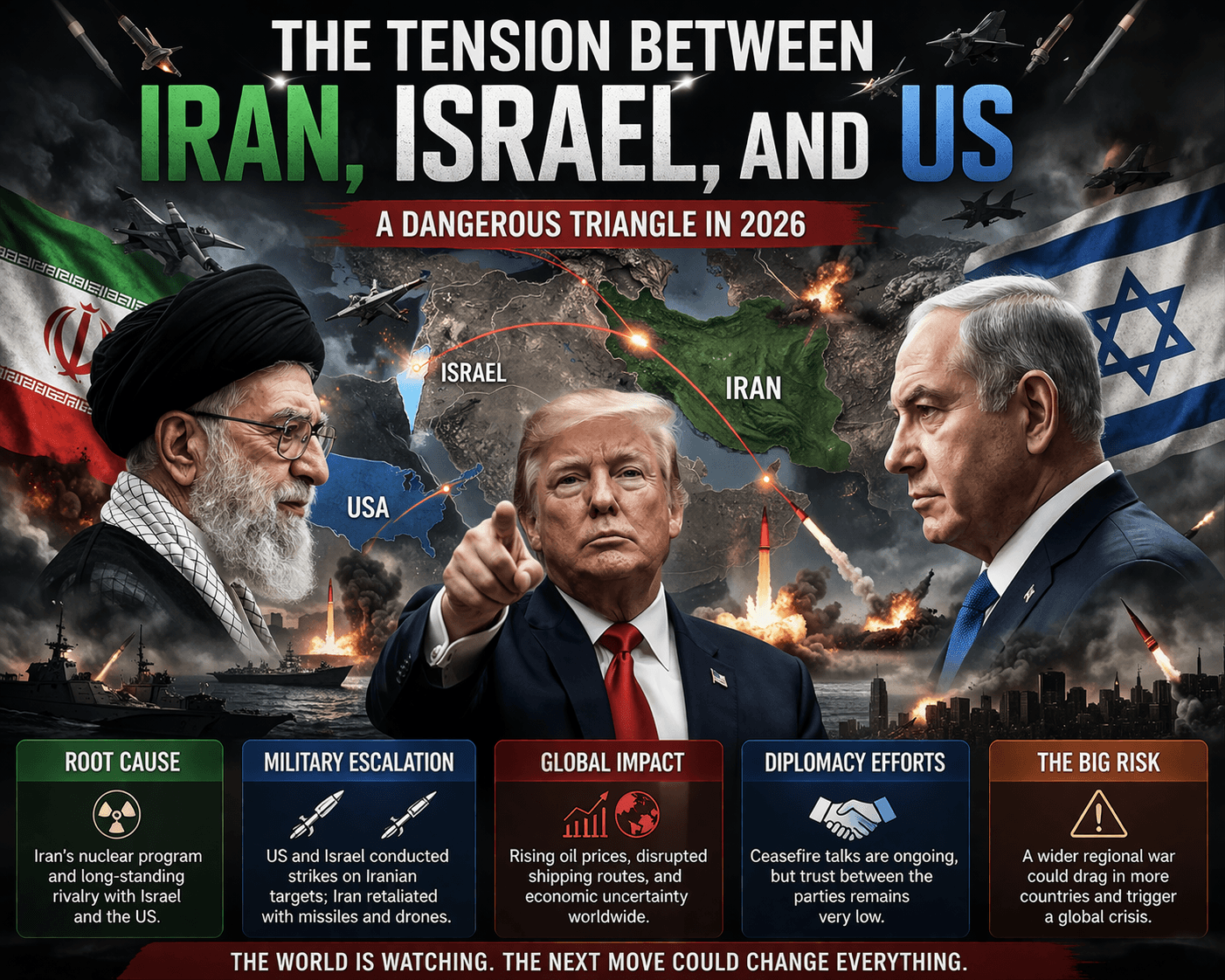
The growing tension between Iran, Israel, and the United States has become one of the most serious global crises in 2026. What started as long-standing geopolitical rivalry has now escalated into direct military confrontation. The situation is no longer limited to political disagreements but has turned into active conflict involving strikes, retaliation, and global economic disruption. This crisis is being closely watched by every nation because of its potential to trigger a wider war. The involvement of major powers makes the situation even more complex. Understanding the roots, current developments, and possible outcomes is essential. This article explores everything you need to know about this ongoing conflict.
Historical Background of the Conflict
The tension between these nations did not begin recently. It dates back decades, particularly after the Iranian Revolution in 1979. Before that, Iran had closer relations with the United States and Israel. However, after the revolution, Iran adopted a strong anti-West and anti-Israel stance. This created long-term hostility. Over the years, conflicts intensified due to political ideologies, regional influence, and military strategies. The mistrust between these nations has only grown stronger. Multiple attempts at diplomacy have failed. This historical context is important to understand the current situation.
The Nuclear Issue: A Major Trigger
One of the biggest reasons behind the tension is Iran’s nuclear program. The United States and Israel have long suspected that Iran is trying to develop nuclear weapons. Iran, however, claims that its program is for peaceful purposes. This disagreement has led to sanctions, negotiations, and repeated conflicts. The collapse of earlier nuclear agreements further worsened the situation. The issue remains unresolved and continues to be a major source of conflict. It is one of the key reasons why tensions have escalated into military action.
The 2026 Military Escalation
In February 2026, the situation took a dramatic turn when the United States and Israel launched large-scale strikes on Iran. These attacks targeted military bases, nuclear facilities, and key infrastructure. This operation marked a shift from indirect conflict to direct confrontation. The strikes caused significant damage and casualties. It also triggered immediate retaliation from Iran. This escalation changed the dynamics of the Middle East.
Iran’s Response and Regional Impact
Iran responded with missile and drone attacks targeting U.S. bases and Israeli positions. The retaliation extended beyond direct targets and affected multiple countries in the region. This widened the scope of the conflict. Several Middle Eastern nations became indirectly involved. The situation created fear of a larger regional war. Iran’s strategy appears to be increasing pressure on its opponents. This has led to a cycle of continuous escalation.
The Strait of Hormuz Crisis
One of the most critical aspects of this conflict is the Strait of Hormuz. This narrow waterway is essential for global oil transportation. Any disruption in this region affects the entire world. The ongoing tension has threatened shipping routes and energy supply chains. Oil prices have shown instability due to this crisis. Global markets are reacting to the uncertainty. This makes the conflict not just regional but truly global.
Global Economic Consequences
The conflict has already started affecting the global economy. Rising oil prices are impacting industries worldwide. Trade routes are being disrupted. Countries dependent on Middle Eastern oil are facing uncertainty. Financial markets are reacting to the instability. Investors are becoming cautious. This crisis has the potential to trigger a global economic slowdown. The longer it continues, the greater the impact will be.
Political Reactions and Diplomacy Efforts
Despite the ongoing conflict, diplomatic efforts are still active. Several countries are trying to mediate and bring peace. There have been proposals for ceasefires and negotiations. However, trust between the parties remains low. Political leaders are under pressure to act carefully. Any wrong move could escalate the situation further. Diplomacy is currently the only path to de-escalation.
The Role of the United States
The United States plays a central role in this conflict. Its military power and alliances influence the situation heavily. The U.S. has taken a strong stance against Iran’s actions. It is also supporting Israel in the conflict. This involvement increases the scale of the crisis. The decisions made by the U.S. government will have major consequences. The situation remains highly sensitive.
Israel’s Strategic Position
Israel views Iran as a major threat, especially regarding nuclear capabilities. It has taken aggressive steps to counter this threat. Israel’s military actions are aimed at weakening Iran’s capabilities. This strategy has intensified the conflict. Israel’s security concerns are a key factor in the ongoing tension. Its actions continue to shape the situation.
Risk of a Wider War
One of the biggest concerns is the possibility of a larger war. If more countries get involved, the conflict could expand rapidly. This could lead to a global crisis. The involvement of major powers increases this risk. Military alliances could turn a regional conflict into an international one. This is why the situation is being monitored closely worldwide.
Impact on Civilians
The conflict is not just affecting governments and militaries. Civilians are facing serious consequences. There have been casualties, displacement, and destruction of infrastructure. Daily life in affected regions has been disrupted. Humanitarian concerns are growing. This highlights the real cost of the conflict. The impact on people is significant and ongoing.
Media and Information Warfare
Another important aspect is information warfare. Both sides are using media to influence public opinion. Narratives are being shaped to gain support. This creates confusion and misinformation. Understanding the real situation becomes difficult. People must rely on verified information. Media plays a powerful role in modern conflicts.
Possible Outcomes of the Conflict
There are several possible outcomes. The conflict could escalate further into a full-scale war. It could also stabilize through diplomatic agreements. Another possibility is a prolonged conflict with no clear resolution. Each outcome has different consequences. The future remains uncertain. Much depends on political decisions and international pressure.
Conclusion: A Critical Moment in Global Politics
The tension between Iran, Israel, and the United States is one of the most important global issues in 2026. It has the potential to reshape geopolitics and the global economy. The situation is complex and constantly evolving. Understanding it is essential for everyone. The world is watching closely. The coming months will be crucial in determining the outcome. Peace or escalation—both possibilities remain open.