Introduction: The Rise of Vibe Coding Tools
Modern development is rapidly evolving, and “vibe coding” tools are changing how developers and designers build applications. Tools like Antigravity combined with Stitch are introducing a new approach where design, code, and performance optimization happen seamlessly together. Instead of traditional workflows that separate UI design and development, these tools integrate everything into a single environment. This shift is helping creators move faster while maintaining high-quality output. Developers no longer need to constantly switch between design software and code editors. The entire process becomes smoother and more intuitive. This transformation is especially important in today’s fast-paced digital ecosystem. Applications must not only look good but also perform efficiently. Vibe coding tools are designed to meet both these demands. Let’s explore how they are improving UI design and performance.
What is Antigravity in Vibe Coding?
Antigravity is designed to simplify development by allowing developers to focus on logic and creativity rather than repetitive tasks. It uses intelligent systems to automate layout structuring and component generation. This reduces the time required to build complex interfaces. The tool understands design intent and translates it into clean, optimized code. This approach minimizes errors and inconsistencies. Developers can experiment more freely without worrying about breaking the UI. Antigravity also promotes modular design, making projects easier to maintain. Its ability to adapt to different frameworks adds flexibility. This makes it suitable for both beginners and experienced developers. Overall, it streamlines the development process significantly.
Understanding Stitch and Its Role in UI Design
Stitch acts as a powerful design system that ensures consistency across applications. It provides reusable components and predefined styles. This helps maintain a uniform look and feel throughout the project. Designers can create visually appealing interfaces without starting from scratch. Stitch also improves collaboration between designers and developers. Everyone works with the same set of components and guidelines. This reduces misunderstandings and rework. The tool supports responsive design, ensuring compatibility across devices. It also allows easy customization for branding purposes. By standardizing design elements, Stitch enhances efficiency. It becomes a foundation for scalable UI development.
Seamless Integration Between Design and Development
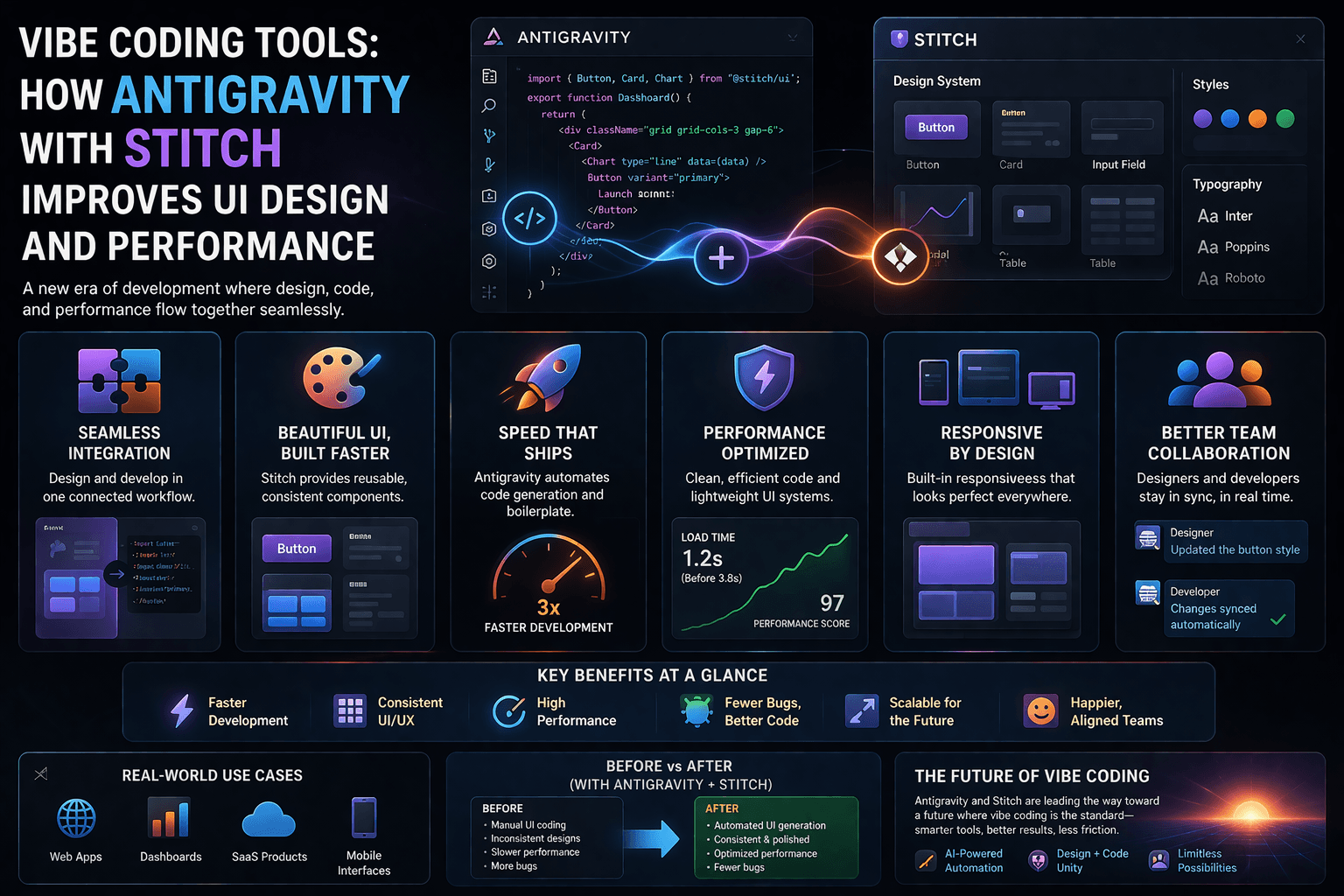
One of the biggest advantages of combining Antigravity and Stitch is seamless integration. Traditionally, design and development are separate processes. This often leads to inconsistencies and delays. With these tools, both processes are unified. Designers can see how their work translates into code instantly. Developers can implement designs without manual conversion. This reduces friction in the workflow. It also speeds up project completion. Real-time updates ensure that everyone stays aligned. This integration improves communication within teams. It creates a more collaborative environment. The result is a smoother and more efficient workflow.
Improving UI Consistency and Visual Quality
Consistency is a key factor in good UI design. Stitch ensures that all components follow the same design rules. This eliminates inconsistencies that can confuse users. Antigravity complements this by generating code that matches these designs perfectly. Together, they create a polished and professional interface. Visual quality is enhanced through standardized elements. Designers can focus on creativity rather than repetitive tasks. The tools also support advanced styling options. This allows for unique and engaging designs. Consistency improves user experience significantly. It makes applications easier to navigate. Overall, the combination leads to high-quality UI design.
Boosting Development Speed and Efficiency
Speed is crucial in modern development, and these tools excel in this area. Antigravity automates many aspects of coding, reducing manual effort. Stitch provides ready-to-use components, saving design time. Together, they accelerate the entire development process. Projects that once took weeks can now be completed in days. This efficiency is especially beneficial for startups and small teams. Faster development also means quicker time-to-market. This gives businesses a competitive advantage. The tools reduce the need for repetitive work. Developers can focus on innovation instead. This leads to better overall productivity.

Enhancing Performance Through Optimized Code
Performance is a critical aspect of any application. Antigravity generates optimized code that improves loading times and responsiveness. It eliminates unnecessary elements and ensures efficient structure. Stitch supports lightweight design components that do not slow down the application. Together, they create high-performing interfaces. Faster load times improve user satisfaction. Performance optimization also impacts search engine rankings. This is important for web applications. The tools ensure that design does not compromise performance. They strike a balance between aesthetics and efficiency. This makes them highly valuable in modern development.

Responsive Design Made Easy
Creating responsive designs can be challenging, but these tools simplify the process. Stitch provides components that automatically adapt to different screen sizes. Antigravity ensures that the generated code supports responsiveness. This eliminates the need for manual adjustments. Developers can focus on functionality rather than layout issues. Responsive design improves accessibility and usability. It ensures that applications work well on all devices. This is essential in a mobile-first world. The tools make it easy to achieve this goal. They provide a consistent experience across platforms.
Reducing Errors and Improving Code Quality
Manual coding often leads to errors, especially in complex projects. Antigravity reduces this risk by automating code generation. The generated code follows best practices and standards. Stitch ensures that design components are used correctly. This combination minimizes mistakes. It also improves overall code quality. Developers spend less time debugging. This increases efficiency and productivity. High-quality code is easier to maintain and scale. It also improves application performance. Reducing errors is a major advantage of these tools. It leads to more reliable applications.
Better Collaboration Between Teams
Collaboration is essential in modern development. Antigravity and Stitch improve communication between designers and developers. Both teams work with the same tools and systems. This reduces misunderstandings and conflicts. Real-time updates keep everyone on the same page. Collaboration becomes more efficient and productive. Teams can share ideas and feedback بسهولة. This leads to better outcomes. The tools create a unified workflow. This is especially important for large projects. Improved collaboration results in higher quality work.
Scalability and Future-Proof Development
Scalability is an important consideration for any application. Antigravity’s modular approach makes it easy to expand projects. Stitch provides a consistent design system that can grow with the application. Together, they support scalable development. This ensures that applications can handle increased demand. It also makes it easier to add new features. Future-proofing is essential in a rapidly changing industry. These tools provide the flexibility needed for long-term success. They adapt to new technologies and trends. This makes them a valuable investment.
Use Cases in Real-World Applications
These tools are being used in various industries, from startups to large enterprises. They are ideal for building web applications, dashboards, and mobile interfaces. Companies use them to speed up development and improve quality. Designers benefit from the consistency and ease of use. Developers appreciate the automation and optimization features. The tools are versatile and adaptable. They can be used for different types of projects. This makes them highly practical. Real-world applications demonstrate their effectiveness. They are becoming an essential part of modern workflows.
Challenges and Limitations
Despite their advantages, these tools have some limitations. Learning new systems can take time. Developers may need to adapt to different workflows. There may also be limitations in customization. Not all designs can be fully automated. Performance optimization depends on proper usage. These challenges are manageable but important to consider. Understanding limitations helps in using the tools effectively. It ensures realistic expectations. Continuous updates are improving these tools. Over time, many limitations are being addressed.
The Future of Vibe Coding
The future of vibe coding looks promising. Tools like Antigravity and Stitch are just the beginning. As technology advances, these tools will become more powerful. They will offer more automation and customization options. Integration with other platforms will improve. This will create even more efficient workflows. The focus will be on simplifying development further. Vibe coding is likely to become a standard approach. It represents the next step in software development. The future holds exciting possibilities.
Conclusion: A New Era of Development
Vibe coding tools like Antigravity and Stitch are transforming UI design and performance. They streamline workflows, improve efficiency, and enhance quality. By integrating design and development, they eliminate traditional barriers. This leads to faster and more effective project completion. Performance optimization ensures that applications run smoothly. These tools are shaping the future of development. They provide a powerful solution for modern challenges. As adoption grows, their impact will continue to expand. This marks the beginning of a new era in UI design and development.