Introduction to a New AI Era
The combination of OpenClaw and Codex represents a major transformation in how artificial intelligence operates in 2026, shifting from simple assistance to full automation of complex workflows. This new approach allows AI systems to not only generate responses but also take real actions in digital environments, making them far more useful in practical scenarios. Developers, creators, and businesses are now exploring ways to reduce manual effort by using these tools together. The rise of autonomous agents means that AI can now handle tasks independently without constant supervision. This reduces workload and improves efficiency across industries. Instead of switching between multiple tools, users can rely on one integrated system. The importance of this shift cannot be overstated, as it marks the beginning of a new phase in AI evolution. Automation is no longer limited to simple tasks but is expanding into full workflows. This combination is becoming increasingly popular among tech professionals. Understanding how it works is essential for staying competitive in the modern digital world.
Understanding OpenClaw and Its Capabilities
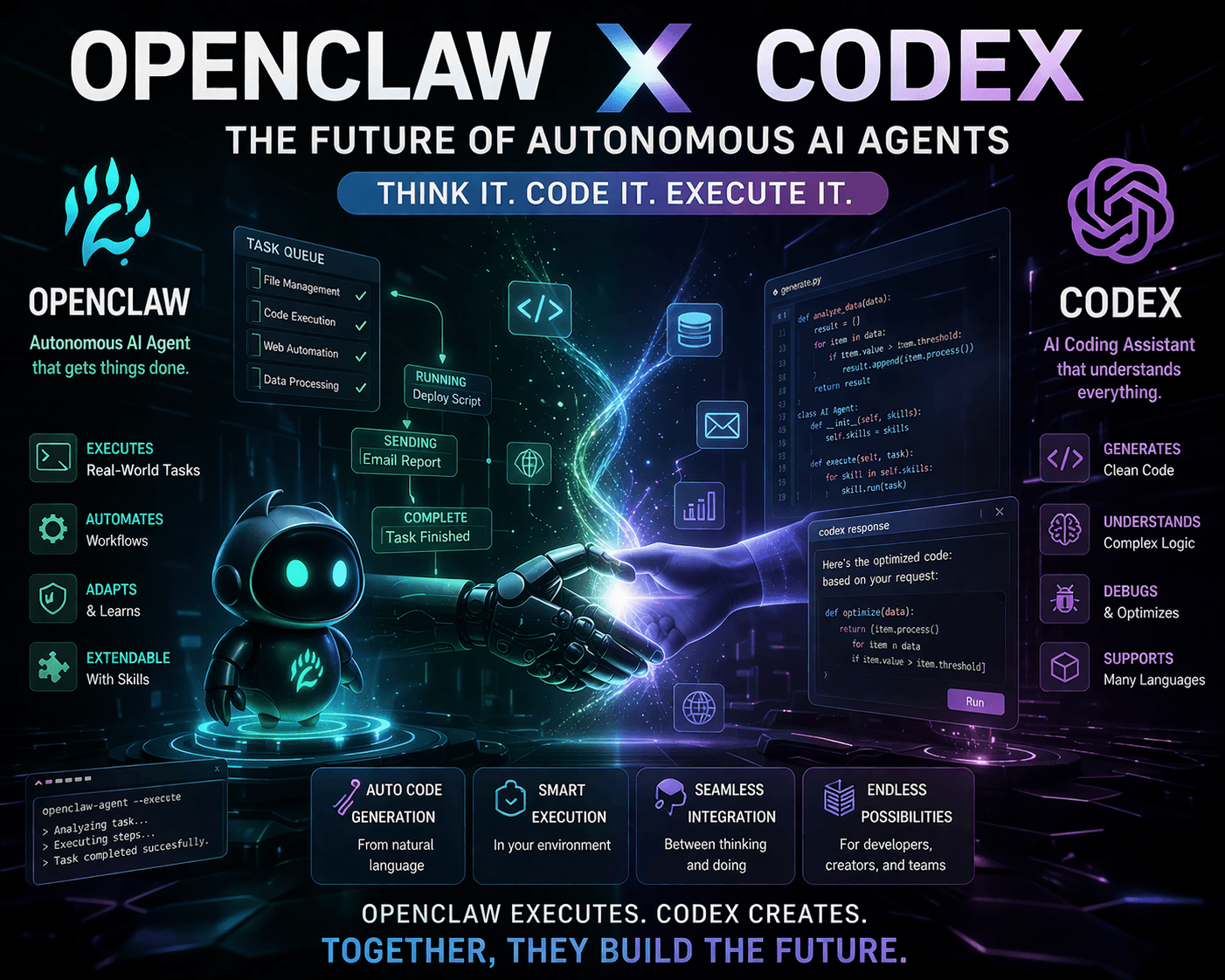
OpenClaw is designed as an autonomous AI agent that can perform real-world tasks directly within a system environment without requiring constant user input. It operates continuously, meaning it can run processes in the background and execute commands over time. This makes it different from traditional AI tools that only respond when prompted. OpenClaw can interact with files, applications, and even online systems, making it highly versatile. Users can assign tasks such as managing data, organizing workflows, or automating repetitive actions. Its modular design allows developers to extend its capabilities by adding new functions. This flexibility makes it suitable for various use cases across industries. OpenClaw focuses on execution rather than just communication, which is a significant advancement. It also allows integration with other AI systems to enhance its performance. As a result, it is becoming a key tool in the development of autonomous systems.
What Codex Brings to the Table
Codex plays a crucial role in this combination by providing advanced coding and reasoning capabilities that power intelligent decision-making. It can understand instructions written in natural language and convert them into functional code. This ability significantly reduces the complexity of software development. Codex supports multiple programming languages, making it highly adaptable. Developers can use it to generate scripts, debug errors, and optimize performance. It also helps in understanding complex systems and automating coding tasks. Codex acts as the brain behind many AI-driven applications. When integrated with execution-based systems, its potential increases dramatically. It allows non-experts to build sophisticated tools with ease. This makes technology more accessible to a wider audience.
The Integration of OpenClaw and Codex
When OpenClaw and Codex are combined, they create a powerful system capable of both thinking and acting autonomously in real-time environments. OpenClaw handles execution, while Codex provides the intelligence required to make decisions. This integration allows users to automate entire workflows without manual intervention. For example, a user can instruct the system to build a project, and it will handle coding, testing, and deployment. This reduces the need for multiple tools and simplifies the development process. The combination enhances efficiency and productivity significantly. It also allows for real-time adjustments and improvements. This synergy between intelligence and execution is what makes the system powerful. It is being adopted rapidly in various industries. The integration represents a new standard for AI systems.
Real-World Applications of OpenClaw x Codex
The practical applications of this combination are vast and continue to grow as more people adopt the technology. Businesses are using it to automate customer service and internal operations. Developers are leveraging it to build and maintain applications with minimal effort. Content creators are using it to generate and manage content across platforms. It can also be used for data analysis and reporting. E-commerce platforms benefit from automated inventory management and marketing strategies. Freelancers use it to handle repetitive tasks efficiently. The system can adapt to different industries and workflows بسهولة. This versatility makes it highly valuable. It is changing how work is done across sectors. The impact is already visible in many fields.
Advantages of Autonomous AI Systems
One of the biggest advantages of OpenClaw x Codex is the ability to automate complex tasks without human intervention, which significantly improves productivity. Users can assign tasks and let the system handle everything from start to finish. This reduces the time required for project completion. It also minimizes errors caused by manual work. The system can operate continuously without fatigue. This makes it ideal for large-scale operations. Businesses can scale their processes without increasing workforce size. Automation also allows for better resource management. The efficiency gained from this system is unmatched. It represents a major step forward in AI technology.
Challenges and Limitations
Despite its advantages, the OpenClaw x Codex system comes with certain challenges that users need to consider before implementing it. Security is a major concern, as the system has access to sensitive data and system operations. Improper configuration can lead to vulnerabilities. Autonomous actions may sometimes produce unexpected results. Codex may generate incorrect or inefficient code in complex scenarios. Users must monitor outputs and ensure accuracy. There is also a learning curve associated with using such advanced tools. Over-reliance on automation can reduce human oversight. Understanding these limitations is important for effective use. Continuous improvement is needed to address these challenges. Responsible usage is essential for long-term success.
Impact on the Future Workforce
The adoption of autonomous AI systems is reshaping the workforce by changing how tasks are performed and what skills are required. Many repetitive jobs are being automated, reducing the need for manual labor. However, new opportunities are emerging in AI management and development. Workers need to adapt by learning new skills related to AI and automation. This shift is creating a more efficient and technology-driven workforce. Companies are investing in AI to stay competitive. The demand for skilled professionals in this field is increasing. This transformation is inevitable and ongoing. It is important for individuals to adapt to these changes. The future workforce will be heavily influenced by AI.
The Future of OpenClaw and Codex
The future of this combination looks promising as technology continues to evolve and improve. OpenClaw is expected to become more secure and efficient. Codex will continue to enhance its reasoning and coding capabilities. Integration with other systems will become smoother. Autonomous agents will handle more complex tasks. Businesses will rely more on such systems for operations. The ecosystem around these tools will expand rapidly. New features and improvements will make them more powerful. This combination will play a key role in the future of AI. It is set to become a standard in automation technology.
Conclusion: A New Standard in AI Automation
OpenClaw and Codex together represent a new standard in artificial intelligence, combining execution and intelligence into one powerful system that can transform how work is done. This combination allows users to automate workflows, reduce manual effort, and increase productivity. While there are challenges, the benefits outweigh the risks when used responsibly. The system is already making an impact across industries. Early adopters are gaining a competitive advantage. The future of AI lies in autonomous systems like this. Understanding and using these tools is essential for success. The world is moving toward automation at a rapid pace. OpenClaw x Codex is leading this transformation. It is shaping the future of intelligent technology.