Introduction to AI-Powered Design
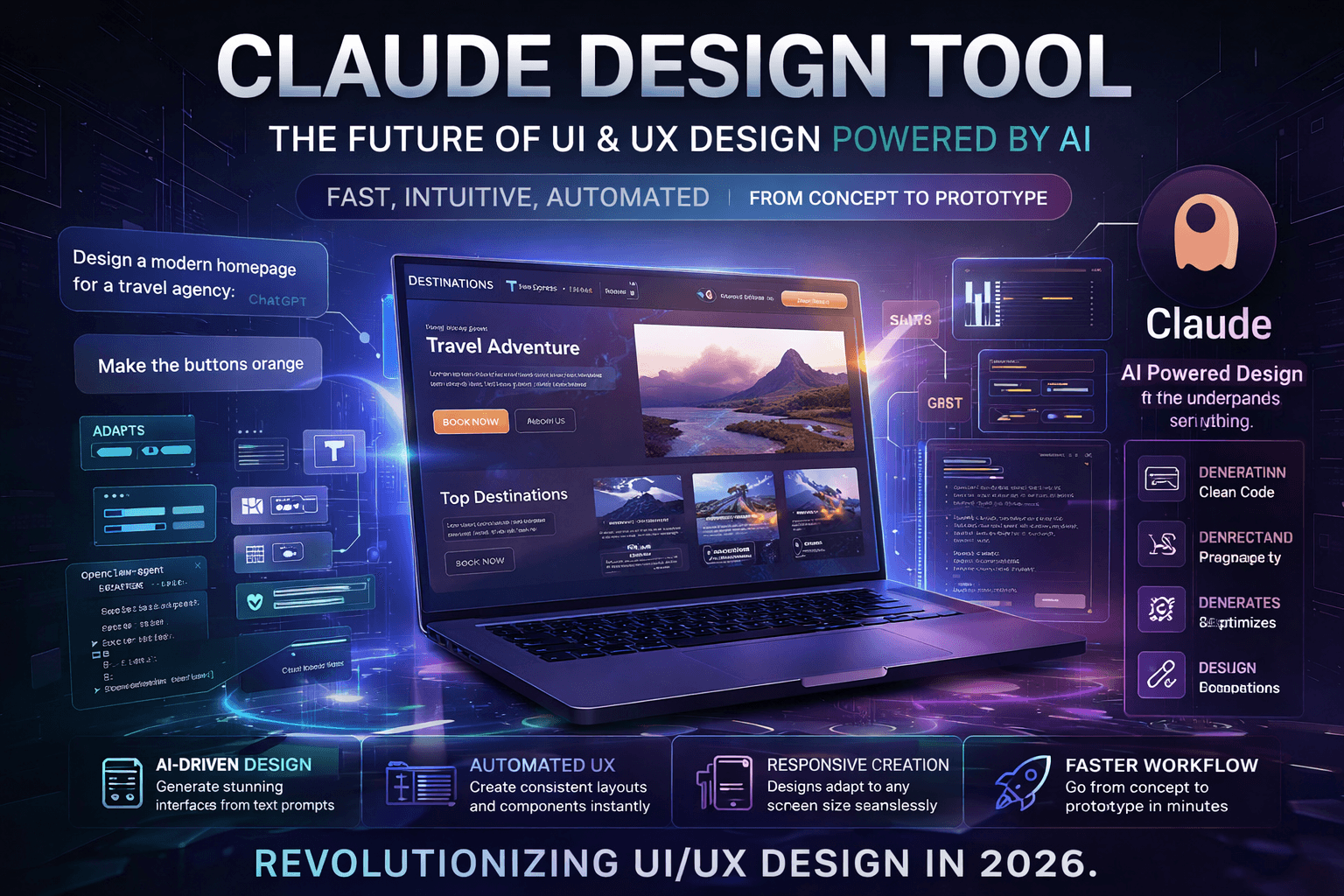
The Claude Design Tool is emerging as one of the most powerful AI-driven platforms for UI and UX design in 2026, transforming how designers and developers approach digital product creation. Traditional design workflows often require multiple tools, constant revisions, and collaboration across teams, but Claude simplifies this entire process into a more unified and intelligent system. By leveraging advanced AI capabilities, it enables users to generate layouts, design components, and even complete interfaces using simple instructions. This shift is making design more accessible to beginners while also increasing efficiency for professionals. The tool focuses on reducing repetitive tasks and enhancing creativity. It allows users to experiment freely without worrying about technical limitations. As digital products continue to evolve rapidly, tools like Claude are becoming essential. This marks a significant step toward automated and intelligent design systems. Understanding its impact is crucial for anyone involved in design or development. The Claude Design Tool is setting a new standard for modern UI/UX workflows.
What is the Claude Design Tool
The Claude Design Tool is an AI-powered platform designed to assist in creating user interfaces and improving user experience through automation and intelligent suggestions. It uses natural language input to understand what the user wants to build and translates it into visual designs. This eliminates the need for complex manual design processes. Users can describe a layout, and the tool generates it instantly. It supports various design elements such as buttons, forms, navigation bars, and layouts. The tool is built to adapt to different design styles and requirements. It also allows customization to match branding needs. This flexibility makes it suitable for a wide range of projects. Designers can focus more on creativity rather than technical execution. The tool bridges the gap between design and development. It is quickly becoming a preferred choice for modern designers.
How Claude Improves UI Design
Claude enhances UI design by automating layout creation and ensuring consistency across all components within a project, which significantly reduces design errors and inconsistencies. It provides predefined design systems that maintain a uniform look and feel. This helps create visually appealing and professional interfaces. The AI suggests improvements based on usability and design principles. It ensures that elements are placed logically and efficiently. Designers can quickly iterate and refine their work. This leads to faster design cycles. The tool also supports responsive design, making interfaces adaptable to different devices. It reduces the need for manual adjustments. Overall, it improves both speed and quality in UI design.
Enhancing User Experience with AI
User experience is a critical aspect of any digital product, and Claude focuses heavily on improving it through intelligent design suggestions and automation. The tool analyzes user behavior patterns and recommends design changes that enhance usability. It ensures that interfaces are intuitive and easy to navigate. This leads to better user satisfaction. Claude also helps in optimizing workflows within applications. It identifies potential usability issues early in the design process. This reduces the need for major revisions later. The AI continuously learns and improves its recommendations. This makes it highly effective over time. Enhancing user experience is one of its strongest features.
Seamless Integration with Development
One of the key advantages of Claude is its ability to integrate seamlessly with development workflows, reducing the gap between design and coding. It can generate code directly from design layouts, making implementation faster and more accurate. Developers can use this code as a starting point. This reduces manual coding effort. It also ensures that the final product matches the design perfectly. The integration improves collaboration between designers and developers. Teams can work more efficiently. This leads to faster project completion. It also reduces misunderstandings and errors. Seamless integration is a major benefit of this tool.
Boosting Productivity and Efficiency
Claude significantly boosts productivity by automating repetitive tasks and simplifying complex design processes, allowing users to focus on creativity and innovation. Designers can create multiple variations quickly. This speeds up decision-making. The tool reduces the time required for revisions. It also minimizes errors. This leads to higher efficiency. Teams can complete projects faster. This is especially beneficial for startups and small teams. Increased productivity gives businesses a competitive advantage. The tool is designed to optimize workflow at every stage. This makes it highly valuable in modern development environments.
Real-World Applications of Claude
The Claude Design Tool is being used across various industries for different types of projects, including web applications, mobile apps, and enterprise software solutions. Companies use it to create dashboards, landing pages, and user interfaces بسرعة. Designers benefit from its ease of use. Developers appreciate its automation features. It is also used in prototyping and testing. This allows teams to validate ideas quickly. The tool adapts to different project requirements. This versatility makes it widely applicable. Real-world usage continues to grow. It is becoming a standard tool in many workflows.
Challenges and Limitations
Despite its advantages, the Claude Design Tool has certain limitations that users should be aware of before fully relying on it for design and development tasks. AI-generated designs may lack uniqueness in some cases. Customization may require manual adjustments. The tool may not fully understand complex design requirements. Users need to review and refine outputs. There is also a learning curve involved. Over-reliance on AI can reduce creative input. Understanding these limitations is important. It helps in using the tool effectively. Continuous updates are improving these issues. Awareness ensures better results.
The Future of AI in Design
The future of design is closely tied to AI advancements, and tools like Claude are leading this transformation by making design more intelligent and automated. As technology evolves, these tools will become more powerful. They will offer better customization and accuracy. Integration with other platforms will improve. Designers will have more control over AI outputs. This will enhance creativity. AI will handle technical aspects while humans focus on ideas. This collaboration will define the future of design. The industry is moving toward automation. Claude is at the forefront of this change.
Conclusion: A New Design Revolution
The Claude Design Tool represents a major shift in how UI and UX design are approached in 2026, offering a powerful combination of automation, intelligence, and efficiency that benefits both designers and developers. It simplifies workflows and improves productivity. It enhances design quality and user experience. While there are challenges, the advantages are significant. Early adoption can provide a competitive edge. The tool is shaping the future of digital design. It is becoming an essential part of modern workflows. The design industry is evolving rapidly. Claude is leading this revolution. It marks the beginning of a new era in AI-driven design.