The collaboration announced today between Baker Hughes and Google Cloud further underscores this shift toward industrial-grade AI sustainability. By integrating Google’s advanced AI analytics with Baker Hughes’ century of expertise in turbomachinery and energy systems, the goal is to optimize how data centers generate, manage, and consume power in real-time. This isn't merely about cutting costs; it’s about survival in an era where data center capacity is the ultimate currency. As AI-enabled power optimization solutions go live, we are seeing the emergence of "intelligent grids" that can dynamically route compute loads based on carbon intensity and local energy availability. This level of synergy between the digital and physical worlds was a dream back in 2024, but in 2026, it is the standard operating procedure for any enterprise hoping to scale its agentic workflows without collapsing the local power infrastructure. This morning's announcement highlights that the next wave of AI growth will be gated not by the complexity of algorithms, but by the availability of high-density, green electricity and the sophisticated software layers required to manage it with precision and reliability across global data center fleets.
On the hardware front, the "Vera Rubin" architecture from NVIDIA is now reaching the hands of early adopters, promising a massive leap in compute density and power efficiency over previous Blackwell systems. This hardware leap is critical because it supports the new "Physical AI" paradigm, where models are no longer just processing text and images but are acting as "world models" that understand the physics of the real world. During today’s news cycle, we also saw companies like Robo.ai scaling their capacity in the Middle East and Asia to provide the tens of thousands of hours of real-world interaction data needed to train these embodied systems. This data isn't just web scrapes; it is structured, high-fidelity recordings of human-machine interactions that teach AI how to navigate physical environments and cultural nuances. This shift represents the commoditization of human-like reasoning, where the value lies not in the model itself, but in the proprietary data and the energy required to run the inference. By turning AI factories into "grid assets," NVIDIA is effectively ensuring that the infrastructure of intelligence becomes as fundamental to a nation's economy as its highways or its telecommunications networks.
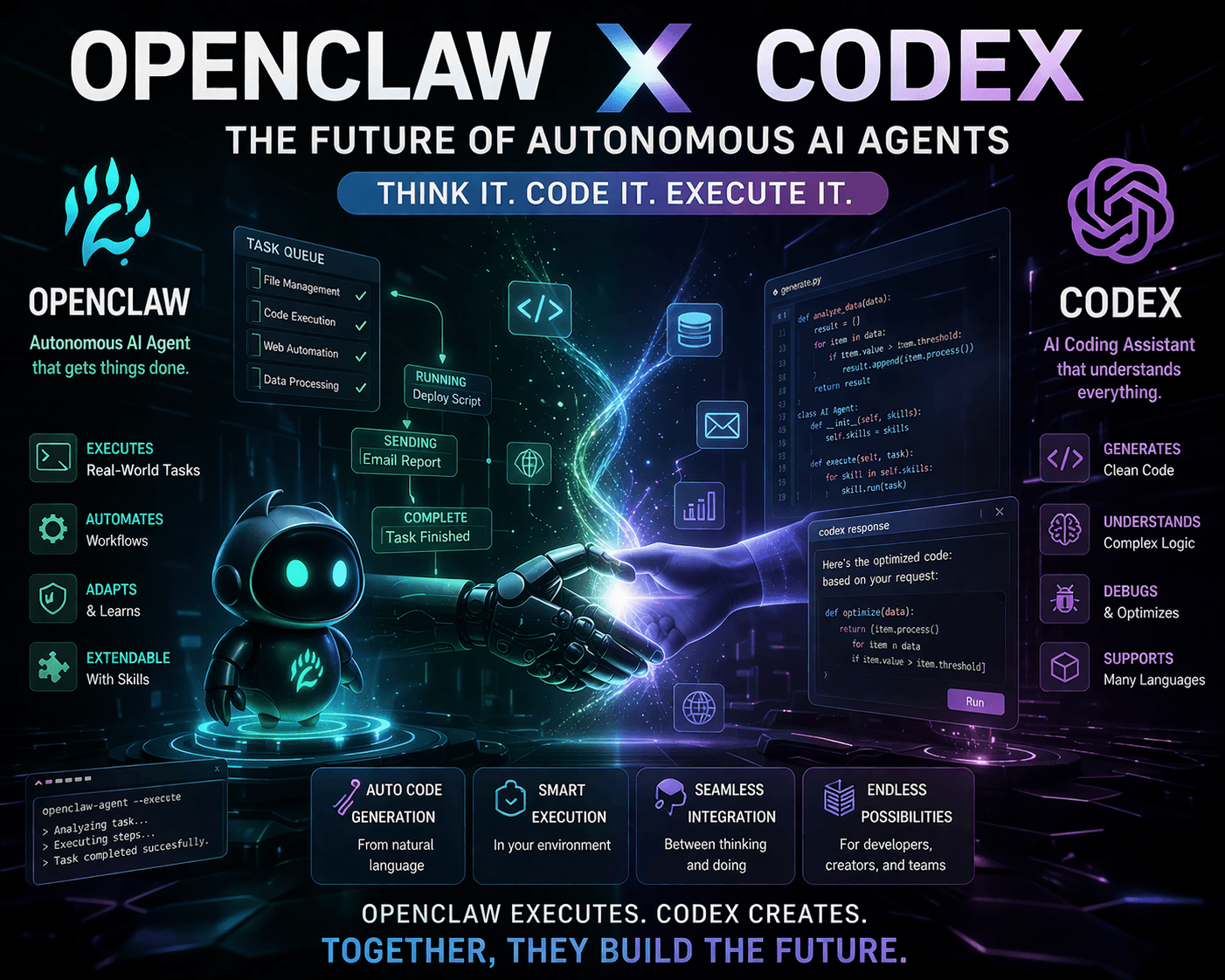
We have officially entered the era of the "Agentic Inflection Point," a term popularized during the recent NVIDIA GTC 2026 conference and echoed in today's industry reports. The focus has moved decisively away from passive chatbots that wait for a prompt toward autonomous agents that can plan, execute, and self-verify complex tasks across multiple software ecosystems. Today’s discussion on the future of SaaS highlights a growing reality: the traditional subscription model is being challenged as AI agents like Claude Cowork begin to navigate user interfaces better than humans. Anthropic’s latest benchmarks show Claude Opus 4.6 hitting unprecedented scores on the SWE-bench scale, suggesting that the bottleneck in software development is no longer the ability to write syntax, but the ability to articulate intent and architectural vision. As these agents become "digital coworkers," they are effectively routing around the graphical user interfaces we’ve relied on for decades, communicating directly with underlying APIs to get work done in the background while we sleep. This transition is forcing developers to rethink how applications are built, moving toward modular architectures that can be easily manipulated by autonomous agents.
The democratization of coding has finally reached its logical conclusion: English is now effectively the world's most popular programming language. In 2026, the barrier between a great idea and a functional application has virtually vanished for anyone who can clearly describe a logical workflow. With tools like GPT-5.4 and specialized React-focused agents, developers are moving from being "coders" to being "architects" and "reviewers." The tags you see on modern blog posts—tech, coding, react—now represent high-level architectural choices rather than manual labor or line-by-line syntax writing. A developer today might describe a complex state management system in natural language, and the AI agent will not only generate the code but also write the unit tests, perform the security audit, and deploy the microservices automatically. This has led to a 10x increase in software output globally, forcing us to rethink how we value intellectual property and the role of human oversight in an automated world. The impact on the startup ecosystem has been profound, as small teams of "human-agent hybrids" can now ship products that previously required hundreds of engineers and months of dedicated effort.
Global infrastructure is also seeing a massive decentralization as emerging markets leapfrog traditional tech hubs through strategic investments. In India, for instance, the government of Uttar Pradesh signed a landmark deal today to establish India’s first "AI City" in Lucknow, aiming to create a self-sustaining ecosystem for the next generation of AI researchers and startups. This ambitious project, which includes a dedicated AI University and massive data center parks, is designed to democratize access to the tools of the revolution for millions of young professionals. By building the "AI Commons"—a shared repository of data and compute resources—the initiative is designed to ensure that the tools of creation are not locked behind a few corporate paywalls. This move mirrors the broader trend of "Sovereign AI," where nations are increasingly viewing AI capacity as a matter of national security and economic independence. In 2026, having your own foundational models and the infrastructure to run them is as important as having your own currency, allowing countries to preserve their cultural context and maintain data sovereignty in an increasingly interconnected and automated global digital economy.
Apple’s announcement today regarding WWDC 2026 further confirms that even the most cautious tech giants are now all-in on generative features and agentic capabilities. Expected to showcase "major AI advancements" in iOS 27, Apple is finally moving Siri beyond basic voice commands into a truly proactive, context-aware digital agent. The rumor mill suggests that iOS 27 will feature "on-device agentic memory," allowing Siri to learn from your past actions and preferences without ever sending your sensitive data to the cloud. This focus on "Edge AI" is a critical counter-narrative to the energy-hungry data center expansion, prioritizing privacy and local efficiency over raw cloud-based power. By utilizing the massive neural engines in our pockets, we can offload significant compute tasks from the grid, creating a more resilient and private intelligence network. This "Personal AI" will act as a buffer between the user and the vast world of autonomous web agents, filtering information, summarizing communications, and executing tasks within a trusted, secure sandbox that protects the user's digital identity and personal data.
The revolution is not without its "growing pains," as a recent global survey by McKinsey and NTT DATA pointed out this morning. While over 85% of organizations report regular AI use, the transition from successful pilots to scaled enterprise impact remains a struggle for many legacy industries. The challenge in 2026 is no longer technical—it is fundamentally organizational and psychological as humans adjust to working alongside autonomous machines. Companies are finding that they need to completely redesign their workflows to accommodate AI agents rather than just "bolting them on" to existing, human-centric processes. This has led to a surge in demand for AI Governance specialists and Prompt Architects, roles that didn't exist in any meaningful way just five years ago. The focus for the rest of 2026 will be on "Self-Verification"—equipping AI with the internal feedback loops necessary to check its own work for accuracy and ethics, thereby reducing the need for constant human "babysitting" and allowing for truly scalable, reliable autonomous business systems.
In parallel with software advancement, we are seeing a total transformation of the digital business model, as suggested by Sam Altman in his latest address at the BlackRock Infrastructure Summit. The industry is moving toward a utility model where AI is sold like electricity or water, billed according to the actual tokens and compute cycles consumed. This represents a paradigm shift from the fixed-fee subscription models of the past decade toward a more granular, "proportional pricing" structure that reflects the true cost of intelligence. Under this model, a simple search query costs very little, while a complex, multi-day engineering simulation or architectural design project draws significantly more resources and is billed accordingly. This shift is intended to better align the costs of infrastructure with the value provided to the end-user, but it also raises concerns about "compute inequality," where smaller firms might be priced out of the most advanced reasoning models. As AI becomes a utility, the availability of energy infrastructure in each country will directly dictate its technological capabilities and its relative economic competitiveness on the world stage.
As we look toward the second half of 2026, the "Agent Economy" is set to become the next major frontier for innovation and investment. We are seeing the development of open standards and protocols that allow disparate AI agents from different companies—Adobe, Microsoft, and Google—to negotiate and exchange services with one another seamlessly. Imagine your personal shopping agent negotiating with a logistics agent from a shipping company to find the fastest delivery route at the lowest price, all without any human intervention or manual data entry. This interoperability will unlock compound efficiencies that are currently trapped within walled corporate gardens, creating a truly global web of intelligence. The goal is to create a seamless fabric of AI that permeates every aspect of our lives, from the way we manage our personal health with AI-driven diagnostics to the way we build the sustainable cities of the future. The revolution is no longer something we are waiting for; it is something we are actively living, one autonomous decision and optimized workflow at a time.
In conclusion, March 24, 2026, stands as a testament to human ingenuity and the immense challenges of managing a technology that is rapidly outstripping our existing physical infrastructure. Whether it is through the bold energy moves by Alphabet, the infrastructure projects in India, or the agentic software breakthroughs from OpenAI and Anthropic, we are witnessing the birth of a new era of intelligence. The transition from AI as a "tool" to AI as a "partner" is now complete, and the focus has shifted to sustainability, governance, and the ethical integration of agents into society. The question for the rest of this decade is not what AI can do, but what we should do with the incredible power it provides to us. As we navigate the complex ethical and logistical hurdles of this historic transition, we must remain vigilant, ensuring that the benefits of this revolution are distributed equitably and that our digital companions remain fundamentally aligned with human values and the long-term sustainability of our planet.