Introduction: A New Wave of Protest Across the United States
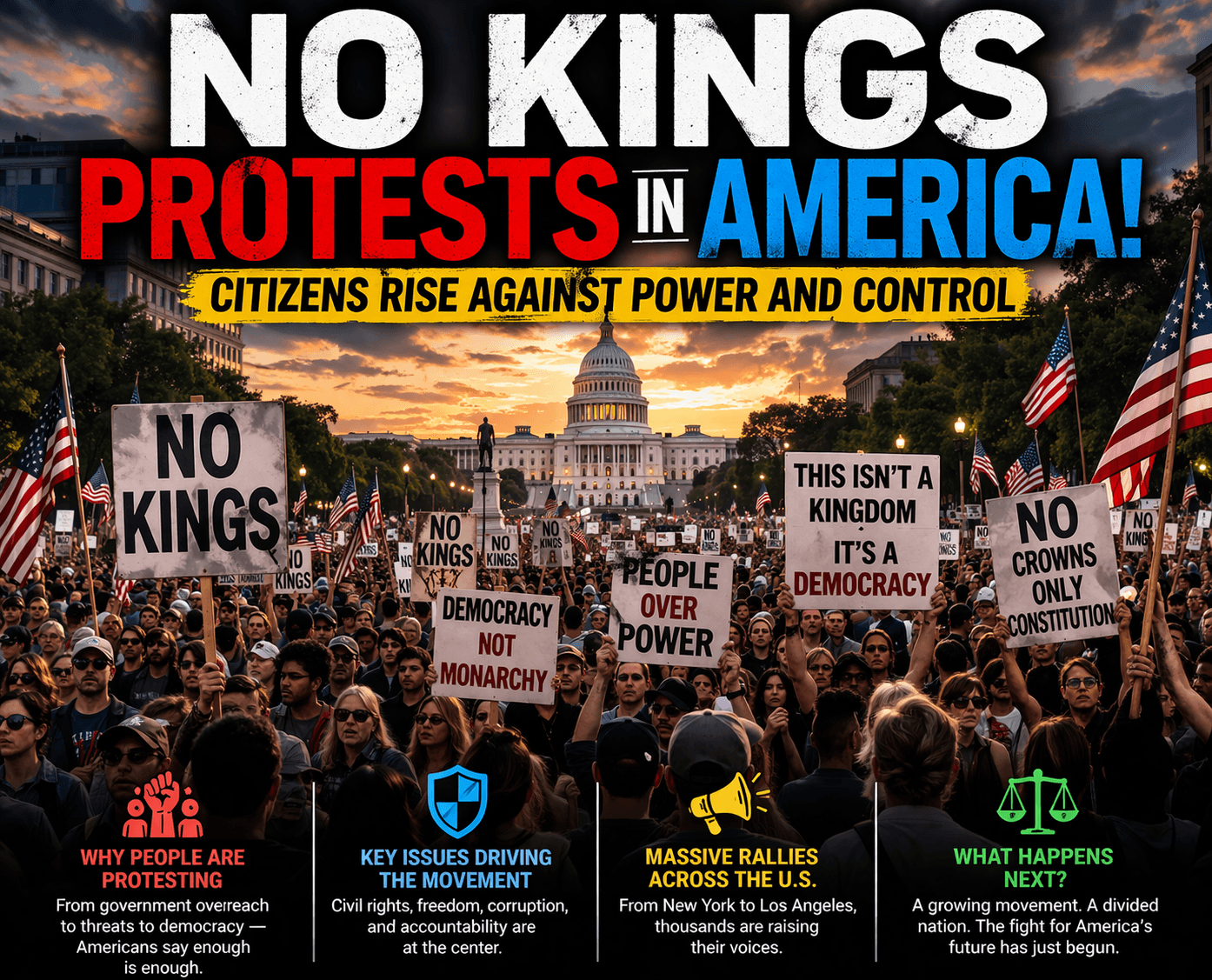
The “No Kings” protests have emerged as a powerful movement across the United States, capturing national attention and sparking intense discussions about democracy, authority, and individual rights. These protests symbolize a growing resistance among citizens who feel that leadership is becoming increasingly centralized and disconnected from the people. The phrase “No Kings” itself reflects a deep-rooted belief in democratic values, rejecting any form of authoritarian control. Across major cities, thousands of individuals have gathered to voice their concerns and demand accountability from those in power. This movement is not limited to one issue but represents a broader frustration with governance and political direction. The protests are fueled by a desire for transparency, fairness, and equal representation. As the movement grows, it is becoming a defining moment in modern American political history. Understanding the origins and impact of these protests is essential to grasp their significance.
What Does “No Kings” Really Mean
The slogan “No Kings” carries a strong historical and symbolic meaning in the United States. It reflects the nation’s founding principles, which rejected monarchy and emphasized democratic governance. Protesters are using this phrase to highlight their concerns about perceived overreach by leaders and institutions. The message is clear: no individual or group should hold unchecked power. This idea resonates deeply with citizens who value freedom and equality. The movement is not about rejecting leadership entirely but about ensuring that power remains balanced and accountable. It serves as a reminder of the importance of democratic systems and the need to protect them. The phrase has quickly become a rallying cry for those seeking change. Its simplicity makes it powerful and widely relatable. As a result, it has spread rapidly across different communities.
The Origins of the Movement
The “No Kings” protests did not appear overnight but are the result of growing dissatisfaction over time. Various political and social issues have contributed to this unrest, creating a sense of urgency among citizens. Economic challenges, policy decisions, and concerns about civil liberties have all played a role. Social media has also been a major factor in organizing and spreading awareness about the movement. Activists have used online platforms to coordinate protests and share information. This has allowed the movement to grow بسرعة and reach a wider audience. The decentralized nature of the protests reflects modern activism trends. People from different backgrounds have come together under a common message. This unity is one of the movement’s strongest aspects. It shows how shared concerns can bring individuals together.
Major Cities Witnessing Protests
Protests have been reported in several major cities across the United States. Urban centers have become focal points for demonstrations due to their large populations and political significance. Crowds have gathered in public spaces, carrying signs and chanting slogans. These gatherings are often peaceful but highly energetic. The presence of diverse groups highlights the widespread support for the movement. Each city brings its own unique perspective to the protests. Local issues often influence the specific demands of participants. Despite these differences, the core message remains consistent. The visibility of these protests has attracted media attention. This coverage has further amplified the movement’s reach. It has also sparked conversations at both local and national levels.
Key Issues Driving the Protests
Several key issues are driving the “No Kings” protests, making them more than just symbolic demonstrations. Concerns about political power, economic inequality, and civil rights are at the forefront. Many participants feel that their voices are not being heard in decision-making processes. This has led to a growing demand for greater accountability. Issues related to governance and policy decisions have also contributed to the unrest. The protests reflect a desire for more inclusive and transparent systems. Participants are calling for reforms that address these concerns. The movement is also influenced by broader global trends. Similar protests in other countries have inspired activists. This connection adds to the movement’s momentum.
Role of Social Media in Mobilization
Social media has played a crucial role in the success of the “No Kings” protests. Platforms have been used to organize events, share updates, and connect participants. This digital approach allows for rapid communication and coordination. Hashtags and viral posts have helped spread the message quickly. Online discussions have also created a sense of community among supporters. People who cannot attend protests in person can still participate digitally. This inclusivity has strengthened the movement. Social media also provides a space for sharing experiences and perspectives. However, it also presents challenges such as misinformation. Despite this, its impact on the movement is undeniable. It has become a key tool for modern activism.
Public Reaction and Divided Opinions
The “No Kings” protests have generated a wide range of reactions from the public. Supporters view the movement as a necessary step toward protecting democracy. They believe it represents the voice of the people. On the other hand, critics argue that the protests may be driven by political agendas. This division reflects the complexity of the issues involved. Public opinion is shaped by individual perspectives and experiences. Media coverage also plays a role in influencing perceptions. Debates surrounding the protests are ongoing. These discussions highlight the importance of dialogue in a الديمقراطية. The movement has sparked conversations that extend beyond the protests themselves. It has become a topic of national interest.
Government Response to the Movement
Authorities have responded to the protests in various ways. In many cases, officials have emphasized the importance of peaceful demonstrations. Law enforcement agencies are working to maintain order during events. Some leaders have acknowledged the concerns raised by protesters. Others have taken a more cautious approach. The response often depends on the scale and nature of the protests. This interaction between protesters and authorities is a key aspect of the movement. It reflects the balance between freedom of expression and public safety. The way this situation is handled will influence future developments. It also highlights the challenges of managing large-scale protests.
Impact on American Politics
The “No Kings” protests are having a noticeable impact on American politics. They are bringing attention to issues that may have been overlooked. Politicians are being urged to address these concerns. The movement is influencing public discourse and policy discussions. It has the potential to shape future elections and political strategies. Activism of this scale often leads to long-term changes. The protests are a reminder of the power of collective action. They demonstrate how citizens can influence the political landscape. This impact extends beyond immediate outcomes. It contributes to the evolution of democratic processes.
Comparison with Historical Protests
The current movement shares similarities with past protests in American history. Throughout the years, citizens have gathered to demand change and challenge authority. These events have often led to significant reforms. The “No Kings” protests follow this tradition of activism. However, they also reflect modern influences such as digital communication. The scale and speed of organization are different from earlier movements. Despite these differences, the core principles remain the same. The desire for fairness and accountability continues to drive protests. This connection to history adds depth to the movement. It shows that activism is an ongoing process.
Challenges Facing the Movement
Like any large-scale movement, the “No Kings” protests face several challenges. Maintaining unity among diverse participants can be difficult. Different groups may have varying priorities and goals. Ensuring that protests remain peaceful is another concern. There is also the challenge of sustaining momentum over time. Public attention can shift quickly, affecting the movement’s visibility. Organizers must find ways to keep people engaged. Addressing misinformation is also important. These challenges require careful planning and coordination. Overcoming them will determine the movement’s success. It is a complex process that requires collective effort.
The Role of Youth in the Protests
Young people are playing a significant role in the “No Kings” protests. They are often at the forefront of demonstrations and activism. This reflects a growing awareness of political and social issues among youth. Their involvement brings energy and new perspectives to the movement. Many young activists are using digital platforms to organize and communicate. This approach aligns with their familiarity with technology. Their participation highlights the importance of future generations in shaping society. It also shows a willingness to challenge existing systems. The youth’s role is crucial for the movement’s sustainability. Their voices are becoming increasingly influential.
Global Attention and Influence
The “No Kings” protests are not only a national issue but also attracting global attention. International observers are closely watching how the situation unfolds. The movement reflects broader themes that resonate worldwide. Issues of power, governance, and democracy are universal. This global perspective adds another layer to the protests. It highlights the interconnected nature of modern societies. The influence of the movement may extend beyond national borders. It could inspire similar actions in other countries. This international dimension increases its significance. It shows how local events can have global implications.
What the Future Holds
The future of the “No Kings” protests remains uncertain but full of possibilities. The movement has already made a strong impact, but its long-term effects are yet to be seen. Continued engagement and organization will be key factors. The response from leaders and institutions will also play a role. The movement could lead to policy changes or shifts in public opinion. It may also evolve into a broader campaign for reform. The direction it takes will depend on various factors. One thing is certain: it has sparked important conversations. These discussions will continue to shape the future.
Conclusion: A Defining Moment in Modern America
The “No Kings” protests represent a significant moment in American society. They reflect a growing desire for accountability and fairness in governance. The movement highlights the power of collective action and the importance of civic engagement. While opinions may differ, its impact is undeniable. It has brought critical issues to the forefront of public discourse. The protests serve as a reminder of the values on which the nation was built. As the situation continues to evolve, its influence will likely be felt for years to come. This movement is more than a protest; it is a statement about the future of democracy.