Introduction: Understanding Regional Pricing in Streaming
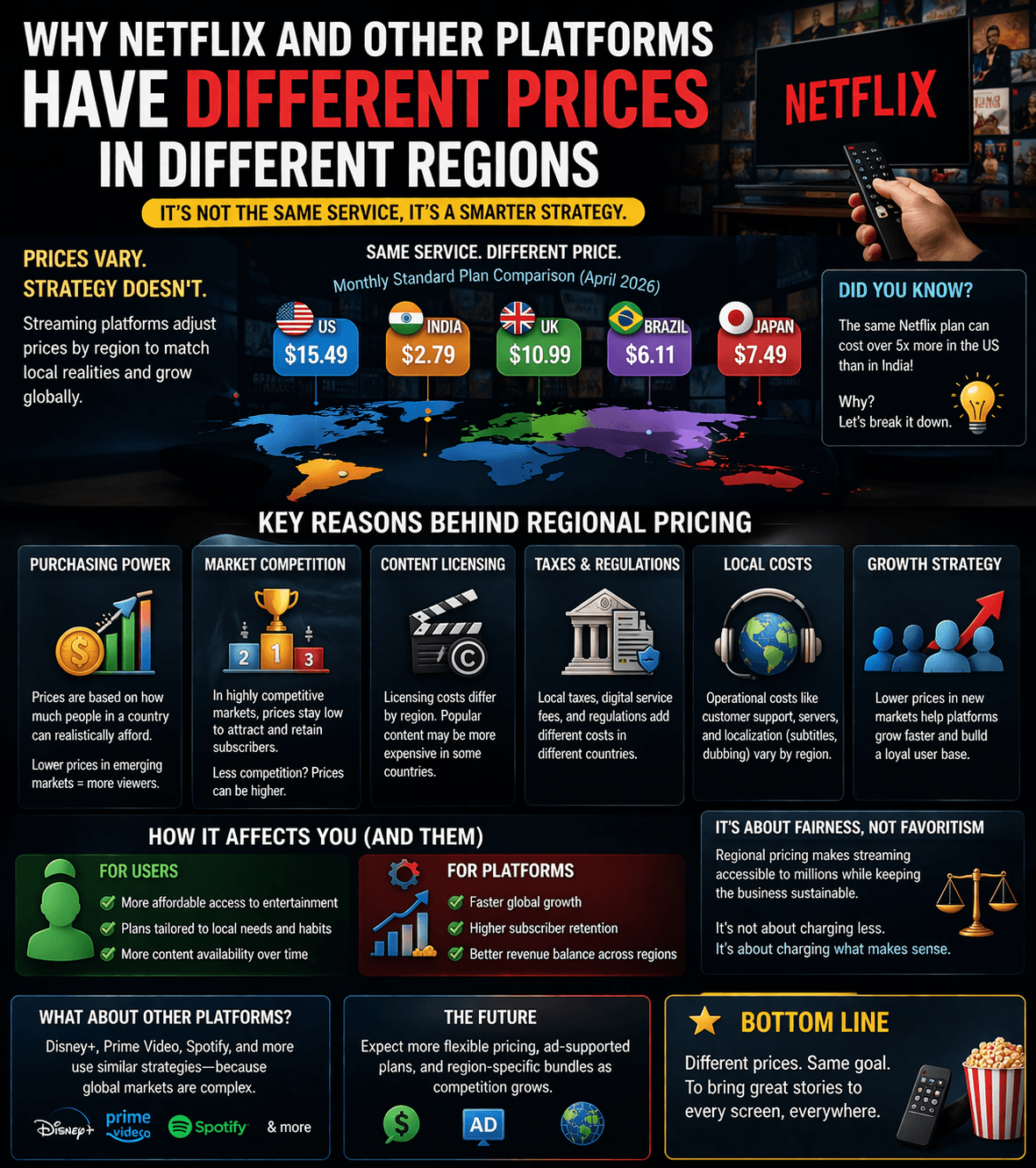
Streaming platforms like Netflix have transformed how people consume entertainment, but one thing many users notice is that subscription prices vary from country to country. This regional pricing strategy often raises questions among users who wonder why the same service costs different amounts depending on location. The answer lies in a combination of economic, strategic, and market-driven factors. Streaming platforms operate globally, but each region has unique conditions that influence pricing decisions. These differences are not random but carefully planned to maximize accessibility and revenue. Understanding regional pricing helps users see the business logic behind these decisions. It also highlights how global companies adapt to local markets. As competition increases, pricing strategies become even more important. This topic is essential for anyone interested in digital services and global economics. Let’s explore the key reasons behind this approach.
Purchasing Power and Economic Differences
One of the primary reasons for regional pricing is the difference in purchasing power across countries. The cost of living varies significantly from one region to another. What may be affordable in one country could be expensive in another. Streaming platforms adjust their prices to match local economic conditions. This ensures that their services remain accessible to a wider audience. For example, subscription fees in developing countries are often lower compared to developed nations. This strategy helps attract more users in price-sensitive markets. Without such adjustments, many potential customers might not subscribe at all. Companies analyze income levels and spending habits before setting prices. This approach allows them to balance affordability with profitability. It is a key factor in global expansion.
Market Competition in Different Regions
Competition plays a major role in determining pricing strategies. In some regions, there are multiple streaming platforms competing for users. This creates pressure to offer competitive pricing. In other areas, fewer competitors may allow for higher prices. Platforms must adapt to the level of competition in each market. Offering lower prices can help attract new users and gain market share. On the other hand, premium pricing may be used in less competitive markets. This dynamic environment influences how companies set their subscription fees. Understanding local competition is essential for success. It ensures that platforms remain relevant and attractive to users. This factor is constantly evolving as new players enter the market.
Content Licensing and Availability
Content licensing costs vary significantly across regions, affecting subscription prices. Streaming platforms do not always own all the content they offer. They often need to purchase rights to stream movies and shows in specific countries. These licensing agreements can be expensive and differ by region. In some markets, popular content may cost more to license. This can lead to higher subscription prices. In other regions, lower licensing costs may allow for cheaper plans. The availability of content also varies by country. This means users in different regions may not have access to the same library. These differences play a crucial role in pricing decisions. They highlight the complexity of global content distribution.
Currency Exchange and Economic Stability
Currency values and economic stability also influence regional pricing. Exchange rates fluctuate, affecting how prices are set and adjusted. Platforms must consider these changes to maintain consistent revenue. In countries with unstable currencies, pricing may need to be adjusted more frequently. This ensures that the service remains affordable while protecting the company’s earnings. Economic stability also affects consumer spending habits. In uncertain conditions, users may be less willing to pay for subscriptions. Companies take these factors into account when setting prices. This helps them adapt to changing economic environments. It is an important aspect of global business strategy.
Government Regulations and Taxes
Different countries have different regulations and tax policies that impact pricing. Some governments impose digital service taxes on streaming platforms. These taxes can increase the overall cost of providing the service. Companies may pass these costs on to consumers through higher subscription fees. Regulations may also affect how services are delivered. Compliance with local laws can add to operational expenses. These factors vary widely from one country to another. Understanding local regulations is essential for operating globally. It also explains why pricing is not uniform. This aspect is often overlooked by users but plays a significant role.
Localization and Operational Costs
Operating in multiple regions requires significant investment in localization. This includes translating content, adding subtitles, and creating region-specific recommendations. Platforms also need local teams for marketing and customer support. These operational costs vary depending on the region. In some countries, these expenses may be higher due to infrastructure or labor costs. This can influence subscription pricing. Localization is essential for providing a better user experience. It helps platforms connect with local audiences. These efforts contribute to the overall cost structure. They are a key factor in regional pricing strategies.
User Growth Strategy and Market Expansion
Regional pricing is also part of a broader growth strategy. Platforms often use lower prices to enter new markets and attract users. Once a strong user base is established, pricing strategies may evolve. This approach helps companies expand quickly. It also allows them to compete with local services. Growth-focused pricing can lead to temporary differences between regions. This is a strategic decision rather than a permanent one. Companies aim to balance growth with profitability over time. Understanding this strategy helps explain pricing variations. It shows how businesses plan for long-term success.
Different Subscription Plans and Features
Not all subscription plans are the same across regions. Some countries may have access to different tiers or features. For example, mobile-only plans may be available in certain markets. These plans are often priced lower to attract users. In other regions, standard plans may dominate. The variety of plans reflects local preferences and usage patterns. This flexibility allows platforms to cater to diverse audiences. It also influences overall pricing structures. Offering multiple options helps maximize user engagement. This approach is tailored to each market’s needs.
Impact of Piracy and Accessibility
Piracy is a significant concern in many regions and affects pricing decisions. In areas where piracy is widespread, lower prices can help attract users to legal platforms. Making services affordable reduces the incentive to use illegal sources. This strategy has been effective in several markets. Accessibility is closely linked to pricing. Lower costs make it easier for users to choose legitimate options. This benefits both the platform and the content creators. Addressing piracy is an important part of global strategy. It influences how companies approach pricing in different regions.
Consumer Behavior and Preferences
Consumer behavior varies across regions and impacts pricing strategies. In some countries, users prefer monthly subscriptions. In others, annual plans may be more popular. Spending habits and entertainment preferences differ widely. Platforms study these patterns to set appropriate prices. Understanding user behavior helps companies design better services. It also ensures that pricing aligns with expectations. This data-driven approach is a key advantage for streaming platforms. It allows them to adapt quickly to changing trends. Consumer insights play a major role in decision-making.
Role of Technology and Internet Infrastructure
Internet infrastructure affects how streaming services are delivered. In regions with slower internet speeds, platforms may offer lower-cost plans with limited features. This ensures that users can still access content. Infrastructure also impacts operational costs. Providing a smooth streaming experience requires investment in technology. These costs vary by region. Platforms must adapt to local conditions. This influences both pricing and service quality. Technology plays a crucial role in shaping the user experience. It is closely tied to regional pricing decisions.
Comparison with Other Streaming Platforms
Netflix is not the only platform using regional pricing. Other streaming services follow similar strategies. Each platform adapts to local markets in its own way. Competition among platforms leads to different pricing models. Some may offer lower prices to attract users. Others may focus on premium content and charge more. This diversity benefits consumers by providing options. It also creates a dynamic market environment. Comparing platforms helps understand pricing differences. It shows that regional pricing is a common practice.
Advantages and Disadvantages of Regional Pricing
Regional pricing has both benefits and drawbacks. On the positive side, it makes services more accessible to a global audience. It also helps companies expand into new markets. However, it can lead to dissatisfaction among users who compare prices across regions. Some may feel that pricing is unfair. This perception can affect brand reputation. Balancing fairness and profitability is a challenge. Companies must communicate their strategies effectively. Understanding both sides of the issue is important. It provides a balanced perspective on regional pricing.
Future of Streaming Pricing Models
The future of streaming pricing is likely to evolve as the industry grows. New technologies and business models may influence pricing strategies. Ad-supported plans and bundled services are becoming more common. These options provide flexibility for users. Regional pricing will likely continue but may become more refined. Companies will use data and analytics to optimize pricing further. The goal will be to balance affordability with profitability. As competition increases, innovation will be key. The future promises more options for consumers.
Conclusion: A Strategic Approach to Global Markets
Regional pricing is a strategic decision that reflects the complexity of global markets. It is influenced by economic conditions, competition, and consumer behavior. Streaming platforms like Netflix use this approach to remain accessible and competitive. While it may seem unfair at first glance, it serves a practical purpose. Understanding these factors helps users see the bigger picture. The streaming industry is constantly evolving. Pricing strategies will continue to adapt to new challenges and opportunities. This approach ensures that platforms can serve a diverse global audience effectively.